11.14.2010

Apartment composting....in the winter?

We have a garbage disposal in my apartment, which is a new appliance for me. At first, I really enjoyed it. No more throwing food scraps in garbage! I didn't realize that the scraps just went into the waste water for the sanitation plant to clean out and send to the landfill anyway. I had previously brushed off the idea of a composting area while I lived in an apartment, but I am revisiting it again. Apparently there are lots of people who compost while in an apartment:http://planetgreen.discovery.com/home-garden/apartment-compost-guide.html

I've done some research and I can either do vermicomposting (as system of turning food waste into potting soil by use of worm) or regular composting, which uses microorganisms.  Neither seem completely feasible in an apartment, especially since we don't have a lot of hidey-holes to stick a stinky bucket of rotting food. I could use our balcony, but I'm not sure how that works in the winter. Apparently, you should not let the compost pile freeze (especially if you have worms!).  They suggest insulating the compost pile, but that doesn't seem feasible on a balcony.

So if I can't compost on the balcony during the winter, here is the question for now: should I wait to start composting until Spring or should I coerce my roommates into letting me compost in the apartment? Opinions?

The power of change

I am inspired when I read or hear of stories of societal change. Stories like the effect of the condom campaign in Thailand (that's a link to a pdf file) or the dramatic increase in wind power as a source of energy in Denmark. In my lifetime societal change has always been fast. The advent of the Internet, cell phones and numerous other technological advances have all happened in my lifetime! I have lived a short 21 years, but already I have seen incredible change. I can only imagine the kind of change my parents or my grandparents have seen.

Given my experience with all this incredibly fast change, it is a struggle for me to hear so much about needed environmental change and see so little being done. Perhaps it's because I am now old enough to be conscious of the change as it is starting and the slow beginnings make me anxious to see more in the future, but I feel as if this movement is crawling. The three pillars of society that encourage change as discussed in our reading by Garder, "Accelerating the Shift to Sustainability" don't seem to be contributing like they should. I am unimpressed with the government - all I can see is partisan arguments and special interests in control. Businesses seem to be thinking in the short term. There are examples of businesses who have heeded the call to go green, but they are in the minority. And civilians, as far as I can tell are valuing quick and easy over long-term benefits. I, myself, have only just woken up to the fact that I need to make some sacrifices to help push change along.

With all these stalled efforts in the three main sectors of our society, how will change ever start? Doesn't at least one sector need to make a big push to convince the others to come along for the ride. In this one area I am feeling pessimistic. I have seen very little to convince me the government or businesses at large will make short-term sacrifices. Indeed, I haven't seen much of that in the civilian sector either. Alas, right now all I can do is lead by example.

11.10.2010

Thinking long term

It occurs to me that any changes I make during my sustainability experiment are essentially useless if I don't continue them beyond this semester. Real change will only come from a lifestyle change. The changes I implement in these couple of months need to be practical for the long term.

The simple changes, like switching over to CFL bulbs is obviously long term, but what about my new commitment to shop as much as possible at the East Lansing Food Co-op? I can't just shop at the co-op a few times this semester and then continue on with life feeling better about myself. I need to make a commitment to myself to institute this change not just here, as a college student in East Lansing, but in any situation. Of course, this could just be all talk. How can I be sure I will follow through? Using some of the methods of changing behavior I discussed in earlier posts, I can be more sure of my commitment lasting throughout my life. But really, I think I need to make these changes a part of me. I need to become a person who buys local food rather than a person who believes buying local food would be good if it wasn't so expensive. I need to shift things around in my budget so there is room for this new change and simply make it so.  This is my new goal. Instead of a vague goal to become more sustainable, I have a goal to change my lifestyle and eat local food. I will do this in whatever city I live in, because I will make it work. Just like I find a way to make rent work, or find a way to make buying gas for my car work. I will find a way to make buying local food work.

11.08.2010

I'm Co-operative!

Last night I shopped at the East Lansing Food Co-op! I like it, I decided. It was pretty interesting to see where all my food came from and kind of odd to imagine that the chicken was all from a farm here in Michigan. It was almost uncomfortable feeling closer to my food. I hadn't realized how far I had separated the chicken in my freezer from the bird on American farms.

As I shopped, I made a list of my apartment's commonly bought items and their prices. I will show them to my roommates and we will decided what we could buy at the Co-op and what we can't afford to buy there. Milk, for example, was too expensive for the amount we drink. But I appreciated the flour, cornstarch, granola and some pastas that were available in bulk. The vegetable supply was about what I expected. They weren't as pretty and shiny as those you find in Meijer (I picked through the bananas a bit) but there wasn't anything wrong with them. I am just used to my vegetables looking like a piece of plastic.

They also have a nice line of natural cleaning supplies, which I might have to take advantage of when we run out of our current supplies. The people were friendly and the food selection was pretty nice. All in all, I am happy and hope to continue shopping there!

11.06.2010

Plans and roommates

I'm going to make a chicken pot pie tonight, but our refrigerator didn't contain a few essential vegetables so I went shopping. While at Meijer, I decided to buy the celery and the carrots from the "organic" section. This isn't something I ever do, mostly because it is more expensive and I share groceries with my roommates. But today I decided to splurge. When I got back home, my one roommate scoffed at the "organic" label but then apologized at laughing at my efforts. She didn't mind the organic, she just didn't believe that the veggies from Meijer were very organic. I tend to agree with her.

I'm going to investigate the East Lansing Food Co-op the next time we need to go grocery shopping. I really want to make an effort to buy food from local vendors. First I will have to compare prices to bring around my roommates.

I can probably use my recently gained knowledge about how to change behavior to my advantage though. In my Environmental Attitudes class we discussed different ways to change behavior based on common human characteristics. They include knowledge of cognitive maps and how they are created, overcoming the "enemies of awareness", knowledge of health values of nature, peers and role models, direct appeals to make commitments, incentives, use of knowledge of territory, and effective communications. Some of these may come in handy when convincing my roommates to forgo the easy trips to Meijer and at least somewhat replace them with trips to the co-op or farmer's markets in the summer. I could use the idea of peer pressure, incentives, and communication. I think those will be the most effective. It will be more difficult since winter is coming, but if I make a commitment myself to start buying some items from local vendors then I am more likely to do so.

10.26.2010

I want an acre

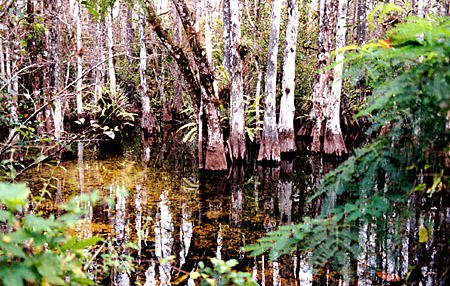
After reading "One Acre" by Joy Williams I have decided it sounds like something I would like to do. Williams bought an acre of land on the edge of the Everglades and just let it grow. She had a house there to live in, but it was a humble house and she made few improvements on it. Eventually, she walled the property in along the road and nature grew wild. From her descriptions, it sounded like a very beautiful place.

It isn't just the beauty that attracts me, it is the idea of creating an area where nature doesn't have to be managed. It can just be. There aren't very many places like that anymore in this world. I understand the reason for that, I really do. I am human and I would like to sustain our population because I believe there are some wonderful things about the population. But as a consequence of population growth, the land around us is affected. Throughout this whole experiment of mine, I have realized, practicality aside, that it saddens me to see so much altered for our civilization.

Protecting just a small area from human change and letting it go through its own natural changes seems like a very nice way of giving back. In a way, it is not actively doing anything, instead it is actively doing nothing except what is necessary. Just as Williams realized, the most important part is making sure it is protected even after I leave it. She searched for the right person to sell it too and I would have to do something similar. I hope I get the chance to facilitate a piece of pure nature.

Confessions

I have been driving my car when unnecessary. After all my big talk about reducing my driving, I am guilty of driving to my night class and to any meetings that are after 6pm (free parking!). My only excuse is the cold and the dark. Once it is dark outside, I have found I don't like biking back to my apartment. (Neither does my mother, honestly.) It is also getting colder and I also don't like the cold. So there you have it, I am a wimpy and lazy environmentalist.

How should I fix this problem? Maybe I should make up for it by carpooling everywhere possible and employing driving techniques to improve my gas mileage.

Something interesting I learned about my balance in the ecosystem today is I am still pretty comparable to the average American. I used the Nature Conservancy CO2 emissions calculator and my estimated emissions are 11 tons of CO2 per year. The U.S. average is 27 and the world average is 5.5. While that is much better than the U.S. average, the details are what is interesting to me. Home energy accounts for 40.7% of my emissions (36.2% U.S.), food and diet is 31.5% (15.1% U.S.), driving and flying is 21.3% (44.3% U.S.) and recycling and waste is 6.5% (4.4% U.S.). I didn't realize how much of my food and diet were contributing to my impact. I'm not sure how to start buying local foods, however. For one thing, they are more expensive and all price decisions have to be agreed upon by my roommates. But I will have to do some research about local suppliers and see if they will supply throughout the winter.


As a sidenote, I am the 753,420,193 richest person in the world. I was expecting a ridiculously large number like that, but I was surprised because that puts me in the top 12.55% of people! Really puts things in perspective, huh? It was pointed out to me, though, that the issue with this site is that "richness" is relative. It is the purchasing power that is important, how much you can get for what you have. But it still makes me think twice about calling myself poor!