Showing posts with label Class. Show all posts

11.30.2010

Spriiing Break!

Ah, the never-ending battle of saving money. That is my life as a college student. It seems that as quickly as I save it, it is spent again. Books, bills (...speaking of, rent is due tomorrow!), and those necessary vacation trips that will create memories for a lifetime. Okay, so maybe vacations aren't really necessary, but if I can't have fun now as a college student, when will I find the time later on in life?

I have a confession to make! I have bought a plane ticket to Hawaii. Yes, I can hear you. All those tons  of carbon spewing into the atmosphere for one Spring Break trip. In my quest for sustainability, did I consider how my desire to travel would effect my impact on the world? Honestly? Not at first.

I didn't even think about my "green ideals" when I decided to go with roommates to Hawaii for a week in March. But when I reached the end of my purchasing process, it asked me if I wanted offset the carbon I would produce by purchasing a little luggage tag that had the word "ECO" on it. While I don't exactly know how effective such a purchase could be, I decided to do it anyway. It was only an extra $7! I wonder now, though, if this is an example of green-washing or legitimate attempt at going green. Either way, I would have gone on this trip. Now I can feel a little bit better about it. As far as I can tell after some research, it's legit!

11.29.2010

Timely reflections on consumerism

The man himself!
Reading John Kenneth Galbraith's writings on "The Theory of Consumer Demand" (that is a link to the abridged text of the overall book, The Affluent Society) brought up a great point, in my opinion. Sure, we all talk about how all of our consumption is a bad thing, but did we ever think about the cycle of consumption we are locked into? Why do we consume so much if we need very little? Why do I crave new shoes or the fanciest Apple product?

Galbraith said it is because advertising tells us we need it! Think about it. To quote him:

"A man who is hungry need not be told of his need for food. If he is inspired by his appetite, he is immune to the effect of Messers. Batten, Barton, Durstine & Osborn. The latter are effective only with those who are so far removed from physical want that they do not already know what they want. In this state alone men are open to persuasion." [Note: I am assuming the aforemention Messrs. are advertising gurus. Also, the italics were my own.]

This water came from a pure mountain!
Surprisingly I had never thought this through before. Why do Americans, among others, need to have commercials for food? Bottled water? Because we actually have no great need for it! Were I in desparate need for water, I would not need at TV commercial tell me which mountain spring it came from in an exotic country. I would just drink the water.

With the surplus of production in Western society, producers had to do something to entice us to buy beyond our needs. Hence, the rise of advertising. I find this very interesting. A whole sector of our business is perpetuating the constant consumerism that causes so much trouble environmentally. In order to change it, we wouldn't just have to change people's habits, but also remove or completely alter portions of our economy.

After coming to this realization, I will be more suspicious of advertising I see and attempt to see past all the bru-ha-ha about the newest toy. Even though iPads look pretty sweet ...

11.06.2010

Plans and roommates

I'm going to make a chicken pot pie tonight, but our refrigerator didn't contain a few essential vegetables so I went shopping. While at Meijer, I decided to buy the celery and the carrots from the "organic" section. This isn't something I ever do, mostly because it is more expensive and I share groceries with my roommates. But today I decided to splurge. When I got back home, my one roommate scoffed at the "organic" label but then apologized at laughing at my efforts. She didn't mind the organic, she just didn't believe that the veggies from Meijer were very organic. I tend to agree with her.

I'm going to investigate the East Lansing Food Co-op the next time we need to go grocery shopping. I really want to make an effort to buy food from local vendors. First I will have to compare prices to bring around my roommates.

I can probably use my recently gained knowledge about how to change behavior to my advantage though. In my Environmental Attitudes class we discussed different ways to change behavior based on common human characteristics. They include knowledge of cognitive maps and how they are created, overcoming the "enemies of awareness", knowledge of health values of nature, peers and role models, direct appeals to make commitments, incentives, use of knowledge of territory, and effective communications. Some of these may come in handy when convincing my roommates to forgo the easy trips to Meijer and at least somewhat replace them with trips to the co-op or farmer's markets in the summer. I could use the idea of peer pressure, incentives, and communication. I think those will be the most effective. It will be more difficult since winter is coming, but if I make a commitment myself to start buying some items from local vendors then I am more likely to do so.

10.12.2010

Activate me


I was recently told by a very good friend that I am not a feather, but instead a boulder. (If you're confused about this statement, please read my last post.) My actions do have an effect, she says, even if indirectly. But does this mean I should be taking more strides to do something about current environmental issues. If I alone have the power to affect change, am I a hypocrite for talking about it and not doing anything drastic?

Should I completely give up my car and ride my bike everywhere? Should I only buy local and organic food sold at the city market? Do I need to go to the extremes? ..I don't want to go to extremes. Is that selfish? I'm not sure exactly, but here is an example to help illustrate my point:

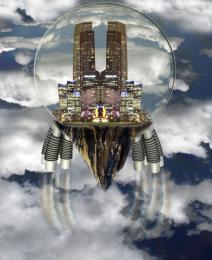
In the book for my class, Wilderness and the American Mind by Nash, he discusses the dichotmy of wilderness and humans. In the end of the book, he concludes that humans are intrinsicly separate from nature, or rather, that our population has outgrown nature. I have a hard time following this line of thought. He uses this argument to say that human civilizations should be small islands amongst all the wild lands of the planet and should build their civilizations up and not out. This seems very extreme to me. Why should humans have to sequester themselves from the rest of the bio-community? Now, don't get me wrong, I am all for restraining our destructive tendancies and containing urban sprawl, but Nash's idea gives me an image of human civilizations floating above the planet. This just strikes me as a really dramatic solution. Sort of like a cosmic mother saying, "If humans can't play nice, then they can't play at all" and punishing the population by forcing it to live in little islands of life in the air. That would be like saying, this fish has eaten all the other types of fish, lets put them all in aquariums so they can't harm anymore fish. Sounds ridiculous to me.

Maybe I am just overly optimistic, but I thatthat life on Earth wouldn't remain unbalanced for very long. Eventually the fish population will even out, even if that means one fish replaces another. I also believe that humans will either figure out a way to continue our civilization into the future by living sustainbly in the environment or die off because of lack of resources. I guess that doesn't sound particularly optimistic. That idea I borrow from Thomas Malthus, who I always thought was cleverly pessimistic in regard to the future of our civilization.

Nordhouse Dunes, A Wilderness area in Michigan.
So, back to my point. Segregating the human population from the very planet that sustains them seems very extreme to me and on a much, much smaller scale, changing my life completely also seems extreme. I don't think us humans are all that bad. A lot of us are careless and destructive, but we have obviously made some significant strides in wilderness protection. (Read some of Nash to learn more about this!) And more will come, I am sure. I will be one of the first to vote in higher standard of fuel efficiency or what evey technology savvy vehicle is invented in the next 50 years. But I am not going to give up my car completely (unless that solar-energy floating car comes out - that I would totally go for!). As Henry David Thoreau believed, it is best to have one foot in civilization and one in the wild. It is important for us to appreciate the wild, but we should also appreciate all the amazing things we have done within our own civilization. As members of Earth we are part of the larger biotic community and the smaller human community. Both are important. So, no, I will not become an activist. I will do all that I can without giving up my current life completely, and those little things I do can still have an effect.

...I am going to Jon Stewart's Rally to Restore Sanity, though. Does that count as activism? :)

10.10.2010

The effect of one


Do you ever think about how tiny and infinitesimal you are? My entire life has consisted of Mid-Western Michigan, with a few forays out into the world. While in the midst of a busy day, it is so easy to get caught up in my life and imagine that everything I do has the utmost importance. I have to do this, I have to do that. I make it sound like if I don't do it, everything will come to a screeching halt. But the truth is, only a few people will even notice. My roommates will, because I chatter to them about everything, repeatedly (their patience is amazing). The professor or my boss (or whoever) will notice. My family will know. And that's it. Nobody outside of this tiny little circle in the middle of Michigan will ever know my life was upended (by good or bad circumstances). The things I do have such a small effect on the whole. I suppose it is something like ripples in a lake. Throwing a big rock in the lake will cause ripples to form and disturb everything on the surface, but I am more like a leaf. Or a feather. My life causes some disruption in others in the immediate vicinity, but nobody on the other side of the lake will ever know.


One of my very best friends (shout-out to Shelly!) is studying abroad right now in Belize and she keeps a bunch of people updated on all of her adventures, which are numerous. Reading her emails reminds me of exactly how huge this planet is and how many tiny little feathers are out there causing the tiniest of ripples in their own lakes. Nobody down there will know about my accomplishments and failures.


And then, think even bigger and you realize how all of these people on the whole planet are only a tiny speck of dust on the surface of one humongous lake in the enormity of space.

So my question for today is, do any of my sustainable efforts even matter? In the scheme of things, will changing all of my lightbulbs reduce energy usage in America? Will driving less and biking more reduce the carbon outputs into the atmosphere? Probably not. Nobody except me (and you, the faithful reader) will ever know I did anything. Why should I even try then? Well, for one, because I want to. Because it makes me feel like I am helping, even if my help matters not at all. But also, because I am an optimist. I believe that all around are tiny little feathers on the surface of my metaphorical lake doing their best to help out. And maybe changing one light bulb doesn't matter, but if a lot of people change their one light bulb then maybe we can push out that ripple of change just a little bit farther.

10.06.2010

Success and introspection

I have installed CFLs in all but a few light fixtures in my apartment! Plus to save on waste of incandescent bulbs, I am keeping the old bulbs and will be putting them back in the light sockets at the end of my lease. This is also a plus for me since I spent the money on these CFLs and would be taking the savings they provide with me when I leave. That is more of an economical decision rather than an environmental decision, but one must wear many hats.

Also, I have purchased a few green body care products, including face wash, shampoo and toothpaste. I am replacing things as I run out of the product because I don't want to waste what product I already have. I have also decided I will purchase makeup (when I run out of current supplies) from Aveda. Their makeup seems to be good quality and green. The cost is a little more than what I normally buy, but I can probably swing it.

On a semi-unrelated note, I have been thinking about the class this blog is for and the issues discussed in it. I can't seem to decide on a particular issue. Should the human race act as if they are part of nature and everything they do is part of the natural cycle, or should we be cognizant of what we do as separate from the natural cycle? This recent sustainable movement seems to be calling for both at the same time.  All this talk of going green and making changes in our life so our actions don't adversely affect the environment strongly suggests that what we do is separate and bad. Or at least just separate. But at the same time it seems to be culling a following of people who appreciate nature and talk about it as if we were all part of the same cycle, similar to more Eastern types of thought.

Which should it be? Can I legitimately say I am part of nature and the environment when I spend so much of my time online in a virtual world that has nothing to do with nature. But if I follow that train of thought, then we are adversely affecting the world and it is selfish to continue doing so, so I should protect it. But do I want to be separate from my environment? Do I really want to see myself as superior from everything else? 
Is pollution from humans the same or worse than from other species.
If, on the other hand, I decide that I am, along with the rest of my species, simply an overgrown ape altering its environment just like every other creature alters their environment, then changes we make shouldn't matter, right? And I should just continue living, confident in the fact that changes happen anyway, anthropological or not.

I suppose I have found a solution after discussing this in length. Or a solution good enough for a fence-sitter like me. The answer lies in the middle, I think, as it most usually does. Of course we as a species are part of our environment. We can't survive without it, so we have to be affected by it and it affected by us. But, we are different from most species on this planet. We have the power of our brains, which have led us to create such civilizations that no other creature has managed. These civilizations, and the people in them, do have the power to change elements of the planet at large. Small changes, compared to the size of the planet,  but significant none the less. 

So what should we do? Overall, I think the goal of the environmental movement sweeping across the planet (somewhat at least) needs to be altered. "Save the planet!," people cry, but the planet doesn't need saving. It will remain for much longer than we can even imagine. Humans on the other hand, are ridiculously delicate. We depend on a certain set requirements for life on Earth. Clean air, clean water, space to live, enough food. As it turns out, we have the power to destroy not the planet, but ourselves.  If changes aren't made in our actions, then we may just destroy the environment we need to survive.

9.26.2010

My wilderness experience

I just got back from a fabulous three-day weekend at Nordhouse Dunes near Manistee, Michigan. It was the best weekend I have had in a long time! The trip was for my Wilderness Writing & Experiences course through the School of Journalism. The class consists of one camping trip. That's it. We turn in a journal at the end of the trip and write a nature essay at the end of it. It is quite literally the best class I have ever taken.

We left on Friday morning, had a quick stop in Muskegon for a lesson on sand dune ecology, and arrived at our camp site around 4pm. There were are 13 students, the professor and a graduate student. The trip was completely unstructured. We were told to do whatever we felt like doing in the park. I hiked with a group to find Nordhouse Lake, a mile or two south of our campsite. Frankly, I am surprised we found it at all because the trails weren't marked all that well!

Lake Michigan. Sigh.....
All in all, the weekend was a perfect respite from the pressure of life here at school and made me think more about my place in the world. The park was an officially designated wilderness area, but it wasn't without touches of humanity. Not only were there the obvious signs, such as the camp sites, but also I saw wrappers on the ground and cans along the side of the road. I saw some of these things even when I felt complete isolated from the world in the middle of the forest. I felt as if I could take 20 steps off the trail and be completely lost from society. But then I would look down and see a gum wrapper and the fantasy would be ruined. But it also reminded me that through human actions and just by chance we are intrinsically linked with nature and the wild and cannot be separated from it, for better or for worse. What that means for how we should be living, though, is something I will have to think about further. 

9.17.2010

Sticker Shock


Buying groceries in bulk is better for the environment, right? That's what I am telling myself because after one trip to Sam's Club for groceries and other essentials, I am out $400. There goes that paycheck! I didn't realize saving money would cost so much. Luckily, the cost will eventually be split between me and my other three roommates, but as an initial payment it was quite a lot.

Only a fraction of the total, which filled the back of a jeep.
But of course, we won't have to buy toilet paper or paper towel for months. There is less packaging on all of our products and everything was cheaper per unit. So overall, it was a good thing. Plus, I won't have to pay for groceries for a long time (not only because we have a LOT of food, but also because my roommates now owe me money and will pay for future trips to the store.

While I was loading all the various foods and toiletries onto the conveyor belt, though, I had to wonder. How can all of this pure consumption be good for the environment? It is hard to see exactly how much extra we need just to live in a college apartment when you buy it in small quantities over time. When you buy a month or two's worth all at once, it really hits home. If I need 48 rolls of toilet papers and 10 containers of Clorox wipes to survive, I don't think I could make it in the wilderness. Then again, all of these supplies originally came from nature at some point. We have just diluted them and morphed to until they no longer resemble anything natural. It sort of proves how much we have separated ourselves from the wilderness.

9.16.2010

Beginnings

Welcome! I am a Michigan State University senior studying Journalism and Environmental Studies. This semester I will be keeping this blog for one of my classes, Environmental Attitudes and Concepts. My purpose will be to document my attempt to live sustainably as an MSU student and my quest to discover what exactly living sustainably means.

Before I started taking this class, I would have considered this an easy assignment. What does living sustainably mean? Obviously it means being "green" by purchasing organic and local foods, recycling, etc. Right? Well after a week in the course, I have begun to realize the issues are more complicated than they seem. This course (and our book, Wilderness and the American Mind by Roderick Nash) has introduced me to an idea I hadn't considered before. That "wilderness" isn't a type of a physical thing, but instead a state of mind and that humans use this idea of wilderness to separate themselves from nature. This has important implications, because if humans are separate from wilderness then any changes made are unnatural and disrupt the natural cycle. But are humans actually separate from the environment, or are we actually nothing more than over-developed apes? If that is true, then all of the anthropogenic changes are simply part of the natural cycle. These are the ideas I will be struggling with throughout the semester. *sigh*

 ...Wish me luck!

In addition to this internal struggle, I am going to implement some changes in my life to try and live a life more balanced with the natural world. I am going to start small with easy changes like replacing my incandescent bulbs with compact flourescent lights (CFLs) and work my way up to more life-altering changes. Well, time to get started!