Showing posts with label human effects. Show all posts

11.16.2010

Closing the Circle

I just read a synopsis of the views and opinions of Barry Commoner, a biologist, professor and Eco-socialist. He wrote something called The Closing Circle. It was interesting because while it contrasted the ideas of the pessimists who believed overpopulation would lead to the end of life as we know it, it arranged a lot of thoughts I had been throwing around in my head quite nicely.

Barry Commoner felt the main cause of the environmental crisis was the economic and political systems that weren't distributing the wealth and resources sufficiently, which was basically technology and the growth of civilization. He called it a "counterecological pattern of growth". Closing the circle means to return to nature the wealth we derive from it. Basically, sustainable living. I didn't expect to agree with Commoner, since I do believe overpopulation is an important issue that shouldn't be dismissed lightly, but I found I did agree with a lot of his ideas. He encapsulates my idea of sustainability in a neat little phrase "closing the circle". Whatever we take out we must put back in.

Related to this line of thought is the Gaia hypothesis, which states that the planet Earth is basically a living being that creates circumstances suitable for life. The problem is that it traditionally it adapts at a biological pace, but humans are causing change at a social pace, one that is much faster than biological change. I like the idea of thinking of the Earth as one complex being with complicated systems for life because it reiterates my idea, and the ideas of Commoner, that humans can't just continue on a path of destruction or the entire system for life may stall. Sure, it may fix itself in the end and life may return or continue on, but there is no guarantee that humans will be apart of that picture. Scary thought.

11.14.2010

The power of change

I am inspired when I read or hear of stories of societal change. Stories like the effect of the condom campaign in Thailand (that's a link to a pdf file) or the dramatic increase in wind power as a source of energy in Denmark. In my lifetime societal change has always been fast. The advent of the Internet, cell phones and numerous other technological advances have all happened in my lifetime! I have lived a short 21 years, but already I have seen incredible change. I can only imagine the kind of change my parents or my grandparents have seen.

Given my experience with all this incredibly fast change, it is a struggle for me to hear so much about needed environmental change and see so little being done. Perhaps it's because I am now old enough to be conscious of the change as it is starting and the slow beginnings make me anxious to see more in the future, but I feel as if this movement is crawling. The three pillars of society that encourage change as discussed in our reading by Garder, "Accelerating the Shift to Sustainability" don't seem to be contributing like they should. I am unimpressed with the government - all I can see is partisan arguments and special interests in control. Businesses seem to be thinking in the short term. There are examples of businesses who have heeded the call to go green, but they are in the minority. And civilians, as far as I can tell are valuing quick and easy over long-term benefits. I, myself, have only just woken up to the fact that I need to make some sacrifices to help push change along.

With all these stalled efforts in the three main sectors of our society, how will change ever start? Doesn't at least one sector need to make a big push to convince the others to come along for the ride. In this one area I am feeling pessimistic. I have seen very little to convince me the government or businesses at large will make short-term sacrifices. Indeed, I haven't seen much of that in the civilian sector either. Alas, right now all I can do is lead by example.

10.26.2010

I want an acre

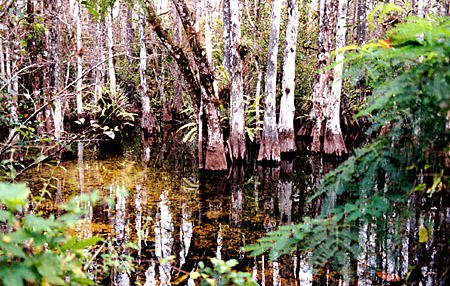
After reading "One Acre" by Joy Williams I have decided it sounds like something I would like to do. Williams bought an acre of land on the edge of the Everglades and just let it grow. She had a house there to live in, but it was a humble house and she made few improvements on it. Eventually, she walled the property in along the road and nature grew wild. From her descriptions, it sounded like a very beautiful place.

It isn't just the beauty that attracts me, it is the idea of creating an area where nature doesn't have to be managed. It can just be. There aren't very many places like that anymore in this world. I understand the reason for that, I really do. I am human and I would like to sustain our population because I believe there are some wonderful things about the population. But as a consequence of population growth, the land around us is affected. Throughout this whole experiment of mine, I have realized, practicality aside, that it saddens me to see so much altered for our civilization.

Protecting just a small area from human change and letting it go through its own natural changes seems like a very nice way of giving back. In a way, it is not actively doing anything, instead it is actively doing nothing except what is necessary. Just as Williams realized, the most important part is making sure it is protected even after I leave it. She searched for the right person to sell it too and I would have to do something similar. I hope I get the chance to facilitate a piece of pure nature.

10.12.2010

Activate me


I was recently told by a very good friend that I am not a feather, but instead a boulder. (If you're confused about this statement, please read my last post.) My actions do have an effect, she says, even if indirectly. But does this mean I should be taking more strides to do something about current environmental issues. If I alone have the power to affect change, am I a hypocrite for talking about it and not doing anything drastic?

Should I completely give up my car and ride my bike everywhere? Should I only buy local and organic food sold at the city market? Do I need to go to the extremes? ..I don't want to go to extremes. Is that selfish? I'm not sure exactly, but here is an example to help illustrate my point:

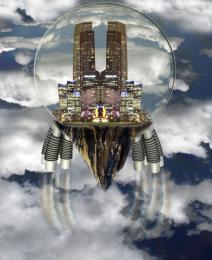
In the book for my class, Wilderness and the American Mind by Nash, he discusses the dichotmy of wilderness and humans. In the end of the book, he concludes that humans are intrinsicly separate from nature, or rather, that our population has outgrown nature. I have a hard time following this line of thought. He uses this argument to say that human civilizations should be small islands amongst all the wild lands of the planet and should build their civilizations up and not out. This seems very extreme to me. Why should humans have to sequester themselves from the rest of the bio-community? Now, don't get me wrong, I am all for restraining our destructive tendancies and containing urban sprawl, but Nash's idea gives me an image of human civilizations floating above the planet. This just strikes me as a really dramatic solution. Sort of like a cosmic mother saying, "If humans can't play nice, then they can't play at all" and punishing the population by forcing it to live in little islands of life in the air. That would be like saying, this fish has eaten all the other types of fish, lets put them all in aquariums so they can't harm anymore fish. Sounds ridiculous to me.

Maybe I am just overly optimistic, but I thatthat life on Earth wouldn't remain unbalanced for very long. Eventually the fish population will even out, even if that means one fish replaces another. I also believe that humans will either figure out a way to continue our civilization into the future by living sustainbly in the environment or die off because of lack of resources. I guess that doesn't sound particularly optimistic. That idea I borrow from Thomas Malthus, who I always thought was cleverly pessimistic in regard to the future of our civilization.

Nordhouse Dunes, A Wilderness area in Michigan.
So, back to my point. Segregating the human population from the very planet that sustains them seems very extreme to me and on a much, much smaller scale, changing my life completely also seems extreme. I don't think us humans are all that bad. A lot of us are careless and destructive, but we have obviously made some significant strides in wilderness protection. (Read some of Nash to learn more about this!) And more will come, I am sure. I will be one of the first to vote in higher standard of fuel efficiency or what evey technology savvy vehicle is invented in the next 50 years. But I am not going to give up my car completely (unless that solar-energy floating car comes out - that I would totally go for!). As Henry David Thoreau believed, it is best to have one foot in civilization and one in the wild. It is important for us to appreciate the wild, but we should also appreciate all the amazing things we have done within our own civilization. As members of Earth we are part of the larger biotic community and the smaller human community. Both are important. So, no, I will not become an activist. I will do all that I can without giving up my current life completely, and those little things I do can still have an effect.

...I am going to Jon Stewart's Rally to Restore Sanity, though. Does that count as activism? :)

10.10.2010

The effect of one


Do you ever think about how tiny and infinitesimal you are? My entire life has consisted of Mid-Western Michigan, with a few forays out into the world. While in the midst of a busy day, it is so easy to get caught up in my life and imagine that everything I do has the utmost importance. I have to do this, I have to do that. I make it sound like if I don't do it, everything will come to a screeching halt. But the truth is, only a few people will even notice. My roommates will, because I chatter to them about everything, repeatedly (their patience is amazing). The professor or my boss (or whoever) will notice. My family will know. And that's it. Nobody outside of this tiny little circle in the middle of Michigan will ever know my life was upended (by good or bad circumstances). The things I do have such a small effect on the whole. I suppose it is something like ripples in a lake. Throwing a big rock in the lake will cause ripples to form and disturb everything on the surface, but I am more like a leaf. Or a feather. My life causes some disruption in others in the immediate vicinity, but nobody on the other side of the lake will ever know.


One of my very best friends (shout-out to Shelly!) is studying abroad right now in Belize and she keeps a bunch of people updated on all of her adventures, which are numerous. Reading her emails reminds me of exactly how huge this planet is and how many tiny little feathers are out there causing the tiniest of ripples in their own lakes. Nobody down there will know about my accomplishments and failures.


And then, think even bigger and you realize how all of these people on the whole planet are only a tiny speck of dust on the surface of one humongous lake in the enormity of space.

So my question for today is, do any of my sustainable efforts even matter? In the scheme of things, will changing all of my lightbulbs reduce energy usage in America? Will driving less and biking more reduce the carbon outputs into the atmosphere? Probably not. Nobody except me (and you, the faithful reader) will ever know I did anything. Why should I even try then? Well, for one, because I want to. Because it makes me feel like I am helping, even if my help matters not at all. But also, because I am an optimist. I believe that all around are tiny little feathers on the surface of my metaphorical lake doing their best to help out. And maybe changing one light bulb doesn't matter, but if a lot of people change their one light bulb then maybe we can push out that ripple of change just a little bit farther.

10.06.2010

Success and introspection

I have installed CFLs in all but a few light fixtures in my apartment! Plus to save on waste of incandescent bulbs, I am keeping the old bulbs and will be putting them back in the light sockets at the end of my lease. This is also a plus for me since I spent the money on these CFLs and would be taking the savings they provide with me when I leave. That is more of an economical decision rather than an environmental decision, but one must wear many hats.

Also, I have purchased a few green body care products, including face wash, shampoo and toothpaste. I am replacing things as I run out of the product because I don't want to waste what product I already have. I have also decided I will purchase makeup (when I run out of current supplies) from Aveda. Their makeup seems to be good quality and green. The cost is a little more than what I normally buy, but I can probably swing it.

On a semi-unrelated note, I have been thinking about the class this blog is for and the issues discussed in it. I can't seem to decide on a particular issue. Should the human race act as if they are part of nature and everything they do is part of the natural cycle, or should we be cognizant of what we do as separate from the natural cycle? This recent sustainable movement seems to be calling for both at the same time.  All this talk of going green and making changes in our life so our actions don't adversely affect the environment strongly suggests that what we do is separate and bad. Or at least just separate. But at the same time it seems to be culling a following of people who appreciate nature and talk about it as if we were all part of the same cycle, similar to more Eastern types of thought.

Which should it be? Can I legitimately say I am part of nature and the environment when I spend so much of my time online in a virtual world that has nothing to do with nature. But if I follow that train of thought, then we are adversely affecting the world and it is selfish to continue doing so, so I should protect it. But do I want to be separate from my environment? Do I really want to see myself as superior from everything else? 
Is pollution from humans the same or worse than from other species.
If, on the other hand, I decide that I am, along with the rest of my species, simply an overgrown ape altering its environment just like every other creature alters their environment, then changes we make shouldn't matter, right? And I should just continue living, confident in the fact that changes happen anyway, anthropological or not.

I suppose I have found a solution after discussing this in length. Or a solution good enough for a fence-sitter like me. The answer lies in the middle, I think, as it most usually does. Of course we as a species are part of our environment. We can't survive without it, so we have to be affected by it and it affected by us. But, we are different from most species on this planet. We have the power of our brains, which have led us to create such civilizations that no other creature has managed. These civilizations, and the people in them, do have the power to change elements of the planet at large. Small changes, compared to the size of the planet,  but significant none the less. 

So what should we do? Overall, I think the goal of the environmental movement sweeping across the planet (somewhat at least) needs to be altered. "Save the planet!," people cry, but the planet doesn't need saving. It will remain for much longer than we can even imagine. Humans on the other hand, are ridiculously delicate. We depend on a certain set requirements for life on Earth. Clean air, clean water, space to live, enough food. As it turns out, we have the power to destroy not the planet, but ourselves.  If changes aren't made in our actions, then we may just destroy the environment we need to survive.